
Chrysalis and Community
Writing Together, Listening to Each Other

As a member of the Fifth Brain Collective, I have had the privilege of writing every week for the last two-and-a-half years with small groups of writers. The Fifth Brain Collective (FBC) now offers three memberships, but at the start, there was only one group that met Tuesday evenings for an hour-and-a-half. The process was the same each week: Frankie (founder of the FBC and author of Do You Feel Like Writing? A Creative Guide to Artistic Confidence) offered a prompt, we wrote for about 20 minutes, and then we shared our writing by either reading it aloud or talking about it. The group then discussed whatever that writer shared.
Nothing earth-shattering here—sounds like a fairly traditional, guided writing group.
But the writing—oh, the stellar bursts of writing that became poetry in prose. The impossible-to-put-into-words experiences that found their language. The images. The linguistic music. And this blossoming happened for members who started out not believing they were writers. For members who didn’t think they could write because a teacher had told them so. For writers putting together traumatic experiences, or who wrote all kinds of fiction, or who wanted to explore creative nonfiction, poetry, performance.
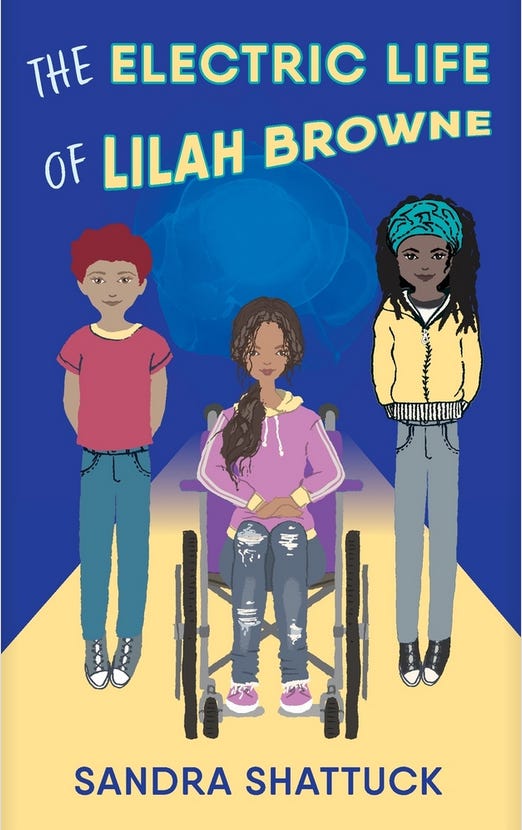
As for me, while my publications are primarily academic with some poetry and creative nonfiction mixed in, my dream was to publish a novel (which I did during a sabbatical when I researched self-publishing). The Electric Life of Lilah Browne, a middle-grade novel about a girls’ computer science club, is the first in a trilogy, and my focus during our collective Fifth Brain writing time is on writing the second book. But the prompts during membership writing might take me to other places, too—like writing “Sally the Gorgon,” a new Medusa image, or a poem on overcoming the inner critic, called “Flower Head.”
How do these creative explorations happen? How do Fifth Brain Collective memberships act as a chrysalis for writers? I have some thoughts, not only as a member, but also as a college instructor of writing and literature (for about 40 years) and as a writer who has practiced her craft in several writing groups over the last few decades.
1) We agree to and practice commonly held values. The FBC uses these values for all interactions, and while I won’t go through all nine values, here’s an example of one: “This Collective understands taking chances and experimenting as the deep work of writers.” As with many of the values, they work both for the writer and the person responding to another’s writing. For writers, this value encourages vulnerability and exploration, points to detours around perfectionism and “tiny rules” (as Frankie calls them) that straightjacket our writing. For responders, this value reminds them to notice and affirm any chance-taking, any courageous explorations beyond comfort zones.
2) We know each other’s writing. The consistency of writers meeting every week, writing together, listening to each other’s writing means that we learn each other’s writing. We know the characters and talk about them as if they were in the Zoom room. We notice when someone has tried something new. We hear the changes in language. This familiarity does not mean that any newcomers to a membership will feel left out. When they respond to someone’s writing, they already have a deeper sense of it because of the group’s comments, and they offer their unique insights while practicing the values.
3) We celebrate each other. Whether we each think of ourselves as beginners or somewhere further along the writing-experience curve, we affirm each other with attentive and caring thoughts and tons of sparkly energy. The symbiosis that we create from our collaborative passion for writing builds the solid foundation of the Fifth Brain Collective, a place where our writing grows.
For a more detailed and inspirational take on writing with the Fifth Brain Collective, please read “writing maps and rejecting rules with the Fifth Brain Collective,” the Substack post by Ames Granados. Be prepared to love that writing!
To give your writing the time it craves, sign up for one or more of the following memberships by visiting our Writing Memberships page:


Sandra Shattuck writes fiction, creative nonfiction, and poetry. She thanks Julie Jung, her first partner in writing from 30 years ago, and the book we used to jumpstart our writing group: Writing Together: How to Transform Your Writing in a Writing Group by Dawn Denham Haines, Susan Newcomer, and Jacqueline Raphael.
 | A guest post by
|
Thanks for this post, Sandra! So happy to be writing with you!